Stargazing in Mukteshwar: A Complete Guide to the Night Sky at Ecoescape
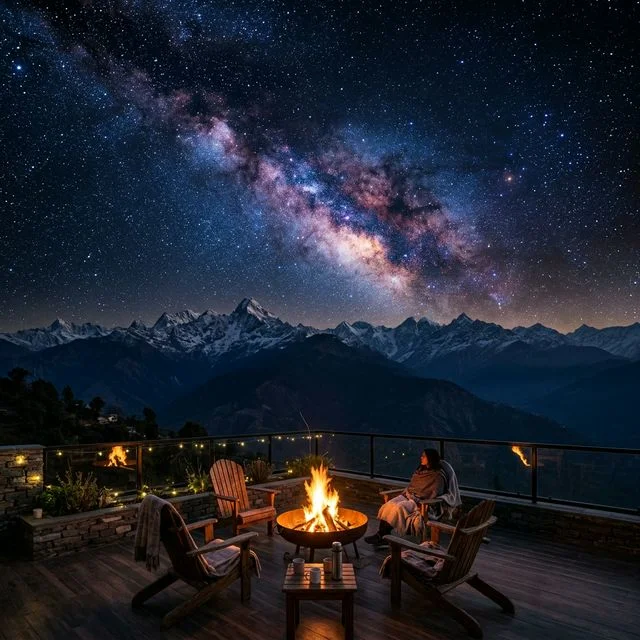
When the sun dips below the Himalayan peaks, a second world awakens in Mukteshwar. At an altitude of 2,285 meters, far from the light pollution of metropolitan cities, the night sky becomes a breathtaking canvas of celestial wonders. Whether you're a seasoned astronomer or a curious dreamer, stargazing in Mukteshwar is an experience that stays with you forever.
At Ecoescape Mukteshwar, we've designed our property to honor this natural gift. Our east-facing terrace offers an unobstructed view of the horizon, making it one of the best spots in the region for astro-tourism. From the silver glow of the Milky Way to the sharp rings of Saturn, here is everything you need to know about the night sky over Mukteshwar.
Why Mukteshwar is Great for Stargazing
- Elevation7,500 ft (High altitude = Thinner air)
- Light PollutionVery Low (Bortle Class 3/4)
- Atmospheric ClarityExcellent (especially in Winter)
- Key AttractionsMilky Way, Planets, Meteor Showers
What You Can See in the Mukteshwar Sky
The mountain sky is far more detailed than what you might see from a city balcony. On a clear night at Ecoescape, you can witness:
The Milky Way
Visible as a faint, glowing band across the sky from April to October. In peak summer months, the Galactic Center rises with incredible detail.
Planets
Jupiter's moons and Saturn's rings are often visible through even basic binoculars. Venus shines brilliantly as the morning or evening star.
Deep Sky Objects
The Andromeda Galaxy, Orion Nebula, and Pleiades star cluster are easy to spot. The clarity here reveals colors city lights usually wash out.
Meteor Showers
The Perseids (August) and Geminids (December) are spectacular here. With no city glare, you can count dozens of "shooting stars" per hour.
Best Time for Stargazing
While every clear night is a good night, certain seasons offer unique advantages:
- October – March:Peak Clarity. Winter air is dry and stable, providing the sharpest views of the stars. This is the best time for deep-sky observation.
- April – June:Milky Way Season. The core of our galaxy is most visible during these months, though occasional dust can affect transparency.
- New Moon:The Golden Rule. Always plan your trip around the New Moon (when the moon is not visible) for the darkest skies and best views of distant stars.
Astrophotography Tips for Beginners
Our terrace at Ecoescape is a favorite for photographers. If you want to capture the stars, keep these basic tips in mind:
- •Use a Tripod: Essential for long exposures (15-30 seconds).
- •Manual Mode: Set your ISO between 1600-3200 and open your aperture as wide as possible (f/2.8 or lower).
- •Focus: Use manual focus and set it to infinity. Small adjustments might be needed to get pin-sharp stars.
- •Remote Shutter: Use a remote or a 2-second timer to avoid camera shake when pressing the button.
The Ecoescape Stargazing Experience
We believe stargazing should be a relaxing, communal experience. On clear nights, our guests gather on the terrace with a bonfire and hot Kumaoni tea. The silence of the mountain, combined with the vastness of the cosmos, creates a profound sense of peace.
For those staying in our Suite with Mountain View, you can even enjoy the celestial display directly from your private terrace.
Experience the Magic of the Night Sky
Book your stay at Ecoescape Mukteshwar and reconnect with the universe. Enjoy bonfire nights, terrace stargazing, and the ultimate dark-sky Himalayan retreat.
Frequently Asked Questions
Do I need a telescope to see the stars in Mukteshwar?▼
No! The sky is so dark and clear that many wonders, including the Milky Way and several constellations, are visible to the naked eye. However, a pair of binoculars or a telescope will reveal even more detail, such as the moons of Jupiter.
What should I wear for stargazing?▼
Since Mukteshwar is at a high altitude, nights are always cool, even in summer. In winter, temperatures can drop near freezing. Warm layers, thermals, and insulated jacketsare essential for a comfortable outdoor experience.
Can I see the Milky Way year-round?▼
The Milky Way is most visible from March to October. In winter, we see a different part of our galaxy with many bright stars like Sirius and the constellation Orion.
The stars are waiting for you.
Step away from the city lights and rediscover the wonder of the universe. At Ecoescape Mukteshwar, every night is an invitation to look up and be amazed.