Mukteshwar vs Shimla: Which Hill Station Should You Choose?
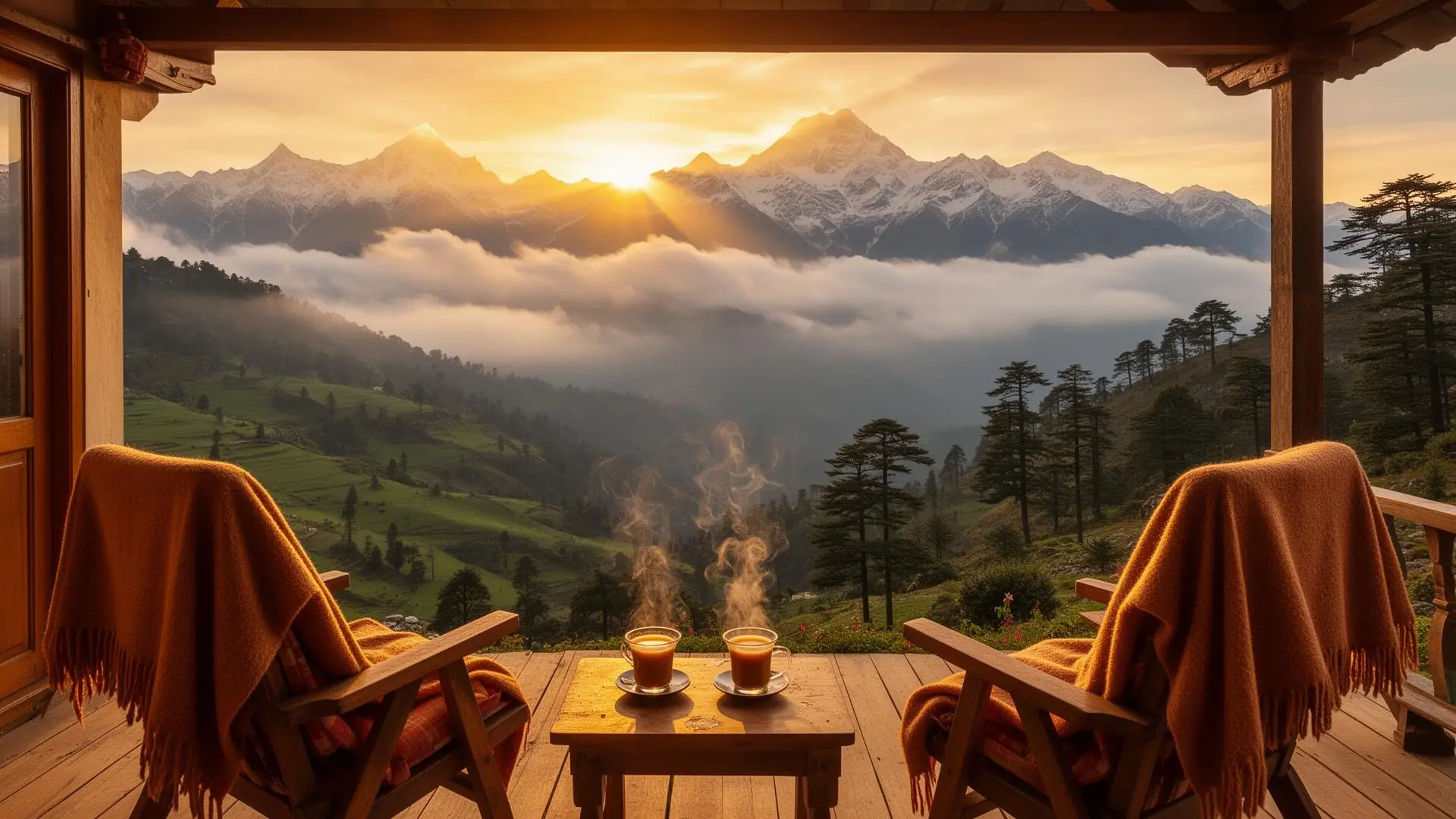
Mukteshwar suits travelers who want a quiet Kumaon village with broad Himalayan views; Shimla suits those wanting a busy former-capital hill station with colonial architecture, mall road, and reliable winter snow. They're in different states (Uttarakhand vs Himachal), 580 km apart, and serve very different traveler profiles.
| Factor | Mukteshwar | Shimla |
|---|---|---|
| State | Uttarakhand (Kumaon) | Himachal Pradesh |
| Altitude | 2,286 m | 2,205 m |
| Distance from Delhi | ~320 km · 7–8 hr | ~340 km · 7 hr |
| Vibe | Quiet village | Busy former-capital town |
| Crowd level | Low | Very high (year-round) |
| Snowfall events / year | 1–3 | 4–6 |
| Himalayan views | Excellent (Nanda Devi visible) | Distant high Himalayas |
| Architecture | Village + IVRI heritage | Colonial — Christ Church, Mall Road |
| Activities | Trek, temple, orchards, stargazing | Kufri, Jakhoo Temple, Mall Road, ice skating (Dec–Feb) |
| Stay starting price | ₹2,500 (homestay) | ₹3,500–₹6,000 (hotel) |
| Best for | Slow travel, couples, workcation, quiet nature | First-time hill-station travelers, snow seekers, town-energy lovers |
Which has better snowfall?
Shimla. Both get snowfall in January–February, but Shimla averages 4–6 events per winter (some years up to 8) while Mukteshwar averages 1–3. Shimla also tends to retain snow cover longer thanks to denser pine forest. If snow is your primary motivation, Shimla — or even better, Manali — is the more reliable pick.
Which has better Himalayan views?
Mukteshwar wins clearly. The Kumaon ridge looks east toward Nanda Devi (7,816 m), Trishul, and the Panchachuli peaks — visible on most clear winter and post-monsoon mornings. Shimla looks west across the Shivalik foothills; the high Himalayas are visible only on exceptional days and are much further away. For the iconic "Himalayan range view" experience, Mukteshwar is stronger.
Which is closer to Delhi?
Roughly equal. Shimla is ~340 km via NH22 (Chandigarh route); Mukteshwar is ~320 km via NH9 (Moradabad–Haldwani–Bhowali). Total drive times are similar (7–8 hours either way). Shimla benefits from the four-laned Chandigarh expressway for the first 250 km; Mukteshwar's last 70 km of hill road is gentler than Shimla's 60 km from Solan onward, which gets significantly congested on weekends.
Which is cheaper?
Mukteshwar — meaningfully. Boutique homestays start ₹2,500/night direct; Shimla hotels typically start ₹3,500 and easily run ₹6,000–₹10,000+ for Mall Road–view rooms. Shimla's food, transport, and activity prices also trend higher as a busier tourist economy.
The verdict
Choose Shimla if…
You want a busy hill town, more reliable snowfall, colonial architecture, mall road shopping, and don't mind crowds. Strong default pick for first-time hill-station travelers.
Choose Mukteshwar if…
You want quiet, broad Himalayan views, cheaper boutique stays, and authentic Kumaoni village experience. Strong pick for repeat travelers and quiet-seekers.
Frequently asked questions
Which is closer to Delhi — Mukteshwar or Shimla?
Shimla is closer at ~340 km / 7 hours; Mukteshwar is ~320 km / 7–8 hours. Practically similar — total drive time depends more on the last 30 km of hill road than the highway portion.
Which has better Himalayan views — Mukteshwar or Shimla?
Mukteshwar — much clearer. At 2,286 m east-facing in the Kumaon range, it sees Nanda Devi and the Panchachuli peaks directly. Shimla at 2,205 m looks west toward the Shivaliks; the high Himalayas are more distant.
Which has more snowfall in winter?
Shimla — significantly. Shimla averages 4–6 snowfall events per winter; Mukteshwar averages 1–3. Shimla also retains snow cover longer. For dedicated snow seekers, Shimla wins.
Which is more crowded?
Shimla — significantly more. It's a former colonial capital with year-round tourism. Mukteshwar is a quiet village with capped infrastructure.
Considering Mukteshwar?
Ecoescape — 4-unit boutique aparthotel in Mukteshwar village. Direct rates from ₹2,500/night.